



Freelance hairdresser admin: everything you need to track as a self-employed stylist
As a self-employed hairdresser you are your own boss - but you are also your own bookkeeper, administrator and tax filer. Every haircut, every bottle of shampoo sold and every tip counts in your accounts. Putting off revenue tracking, VAT records and client data means you will hit the end of each quarter with a pile of unsorted receipts and inaccurate returns. This article explains which administrative obligations apply to freelance hairdressers, how VAT on hairdressing services works, what a POS system handles for you, and how salon software dramatically simplifies your daily admin - so you can focus on the craft you trained for.
What records does a self-employed hairdresser need to keep?
As a sole-trader hairdresser you have a legal obligation to maintain proper records. Tax authorities across Europe generally require financial records to be kept for seven years. In practice this comes down to a few concrete categories.
Revenue records
Every treatment you carry out is a taxable supply. You need to be able to show, per day, how much revenue you earned, through which payment method (cash, card, bank transfer) and for which services. A daily summary with date, amount and payment method is the minimum requirement.
Purchase invoices and receipts
Shampoos, colour products, hairdressing tools, rental costs for your chair - all your business expenses are deductible, but only if you hold the supporting invoice or receipt. Keep them for seven years, preferably in digital form.
Debtors and creditors
Do you have clients who pay on account (corporate clients or salon owners who hire you)? Then you maintain a debtors list. Do you have suppliers with payment terms? Then there is also a creditors list. Most solo hairdressers work with immediate cash or card payment, so these two lists are minimal.
VAT records
As a self-employed hairdresser you must calculate, record and file VAT returns periodically. More on this in the next section.
Contracts
Are you renting a salon chair or treatment room? Then you have a rental contract. Working as a regular freelancer for a salon? A service agreement is advisable. Keep all relevant contracts.
VAT for hairdressing services: what applies to you?
VAT administration is for many freelance hairdressers the most confusing part of bookkeeping. The rules are however more straightforward than they seem.
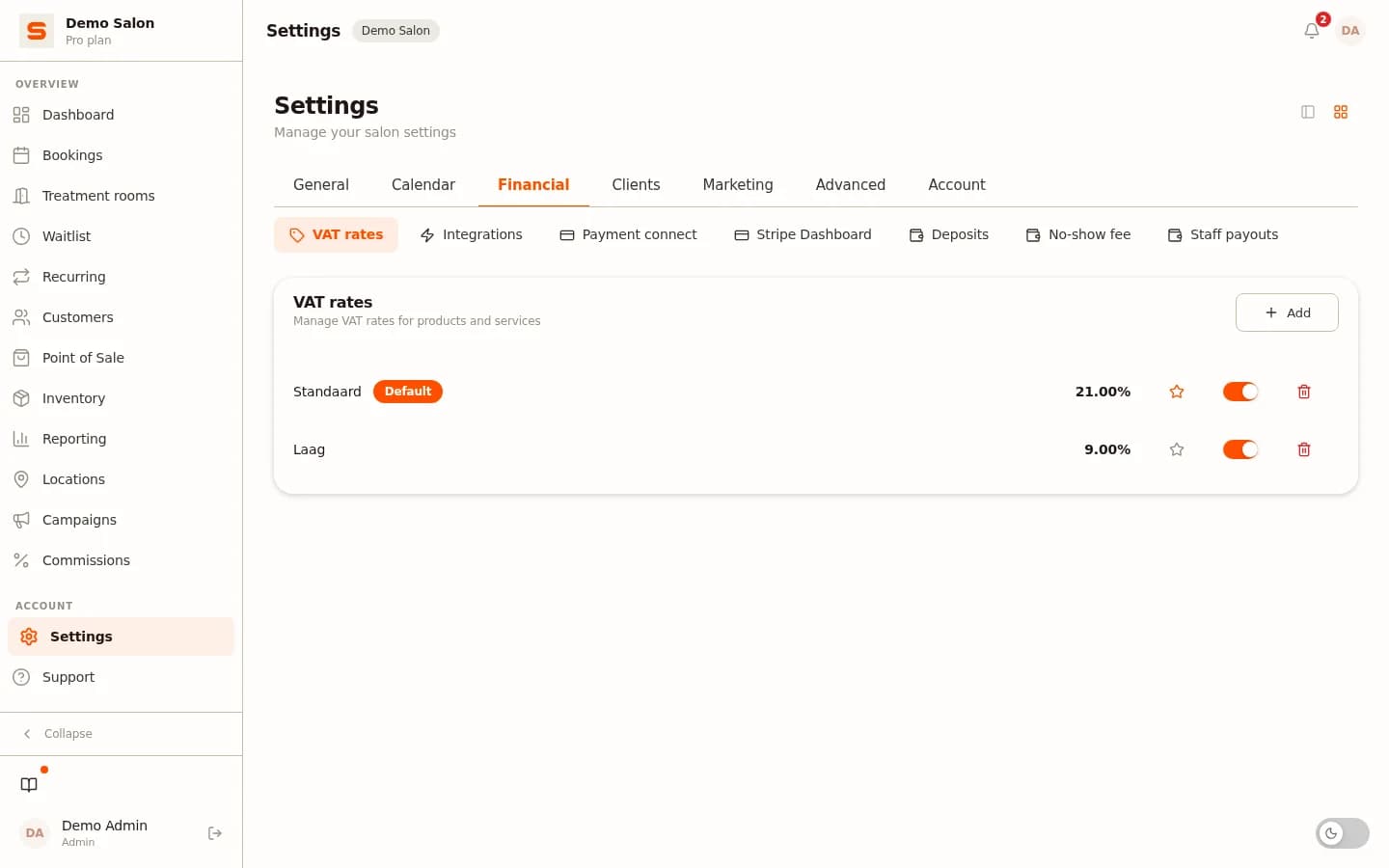
VAT rates for hairdressing services
In the Netherlands, two VAT rates apply to hairdressing depending on the type of supply:
- 9% VAT applies to hairdressing treatments such as cutting, washing, blow-drying, colouring and hair treatments. This reduced rate applies because hairdressing is classified as a labour-intensive service. - 21% VAT applies to the sale of products such as shampoo, hairspray, hairdryers and accessories. Products always attract the standard rate.
A mixed receipt - treatment plus product - therefore contains two VAT lines. Your POS system must split these automatically.
Small business exemption
If your annual turnover (excluding VAT) stays below €20,000, you may opt for the small business exemption (in Dutch: KOR). Under this scheme you do not charge VAT and do not file VAT returns, but you also cannot reclaim VAT on business purchases. The exemption is opt-in: if you have growth potential above the threshold, consider carefully whether it is beneficial. Discuss this with your accountant.
Quarterly VAT returns
Most freelance hairdressers file quarterly VAT returns. You declare how much VAT you collected on services and products, how much VAT you paid on business purchases, and remit the difference. A good POS system generates a ready-to-use VAT report for each period.
Tip: split treatments and products at the till
The most common VAT mistake for freelance hairdressers is charging a single price for a treatment that includes a product (for example a cut including hairspray) without splitting the components. Create separate service codes in your POS for services (low rate) and products (standard rate), so the till automatically applies the correct VAT split.
How a POS system simplifies your admin
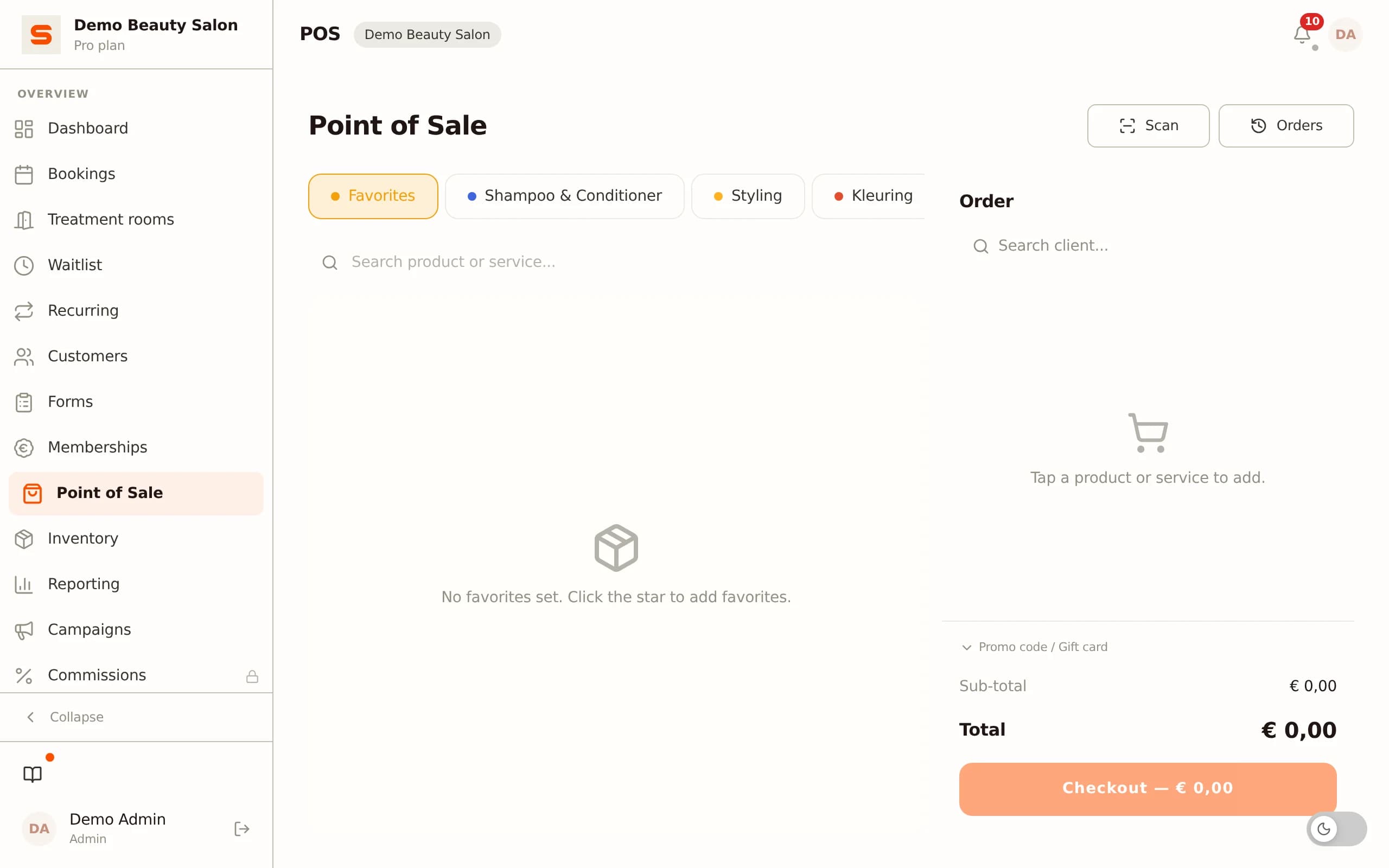
A POS system for a freelance hairdresser is much more than a card reader. A modern salon POS automatically captures all the information you need for your bookkeeping.
Automatic revenue recording
Every sale at the till is logged with date, time, service, amount and payment method. You never have to manually write up a daily summary - the system does it for you. At the end of the day you see your daily revenue instantly, broken down by payment method.
VAT split per service and product
In Salonnare you set the correct VAT rate for each service and each product. With every sale the system automatically calculates the correct VAT - reduced rate on treatments, standard rate on products. The till report shows the totals per VAT rate, exactly in the format you need for your VAT return.
Stock management for products
Do you sell hair care products to clients? Every bottle sold automatically reduces the stock level. You can see at a glance when a product is running low, so you can reorder in time. Fewer missed sales and less time counting stock by hand.
Bank transfer and card payments directly linked
As a freelance hairdresser you want payments to be fast and reliable. Salonnare connects via Stripe or Mollie to bank transfers, credit card and direct debit. Clients who book online can pay at the time of booking or pay a deposit upfront. At the counter the checkout runs via a connected card reader. Payouts go straight to your own business bank account, and you pay a fixed monthly price - no percentage per booking.
Accounting report for your bookkeeper
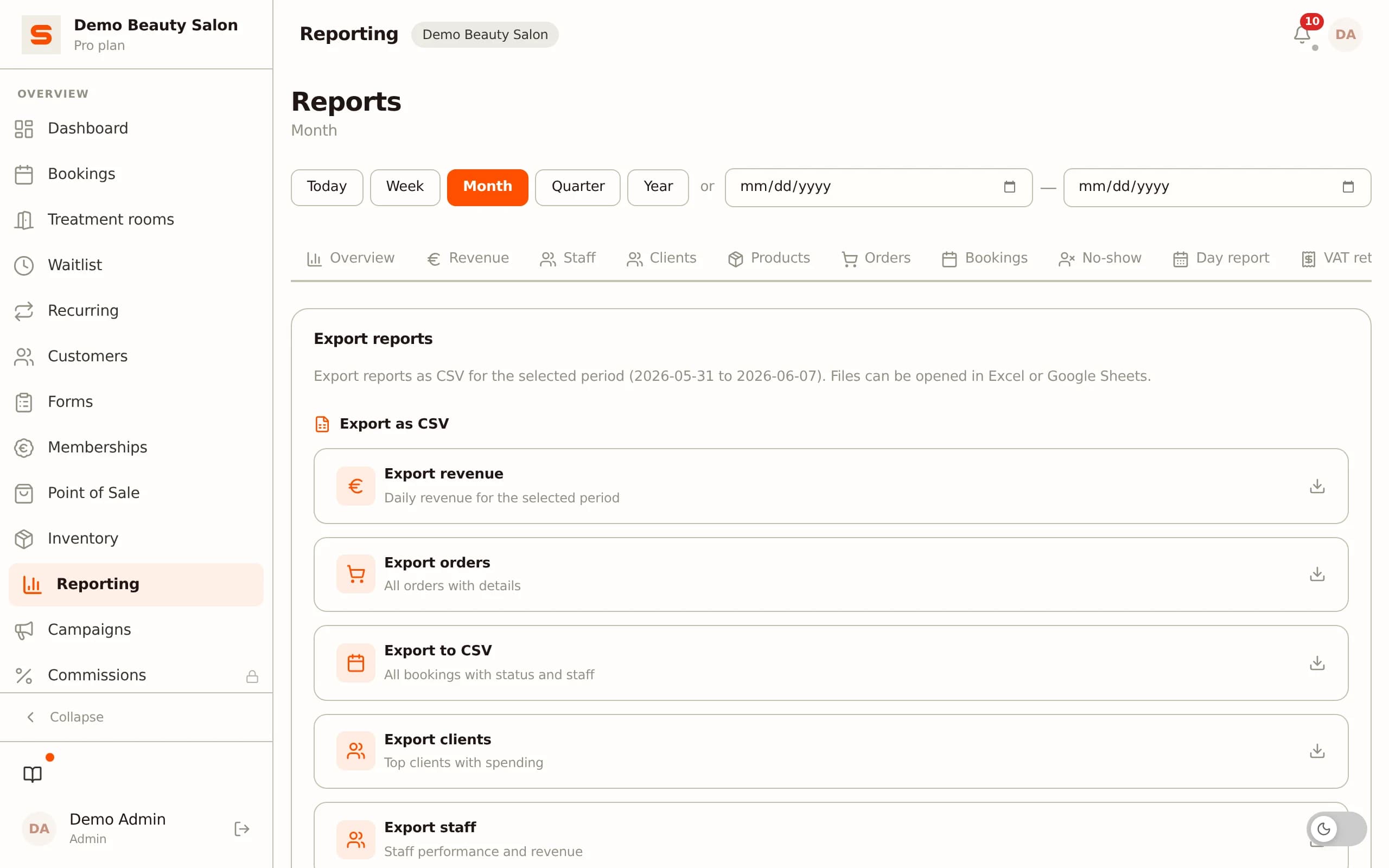
Every month or quarter you export a CSV report from Salonnare with all transactions. You hand that file to your accountant or use it yourself for your VAT return. No manual data entry, no spreadsheet calculations.
Client management as part of your admin
Client data is not only useful for your diary - it is also part of your business records. As a freelance hairdresser you build a client base that has real business value.
What do you record per client?
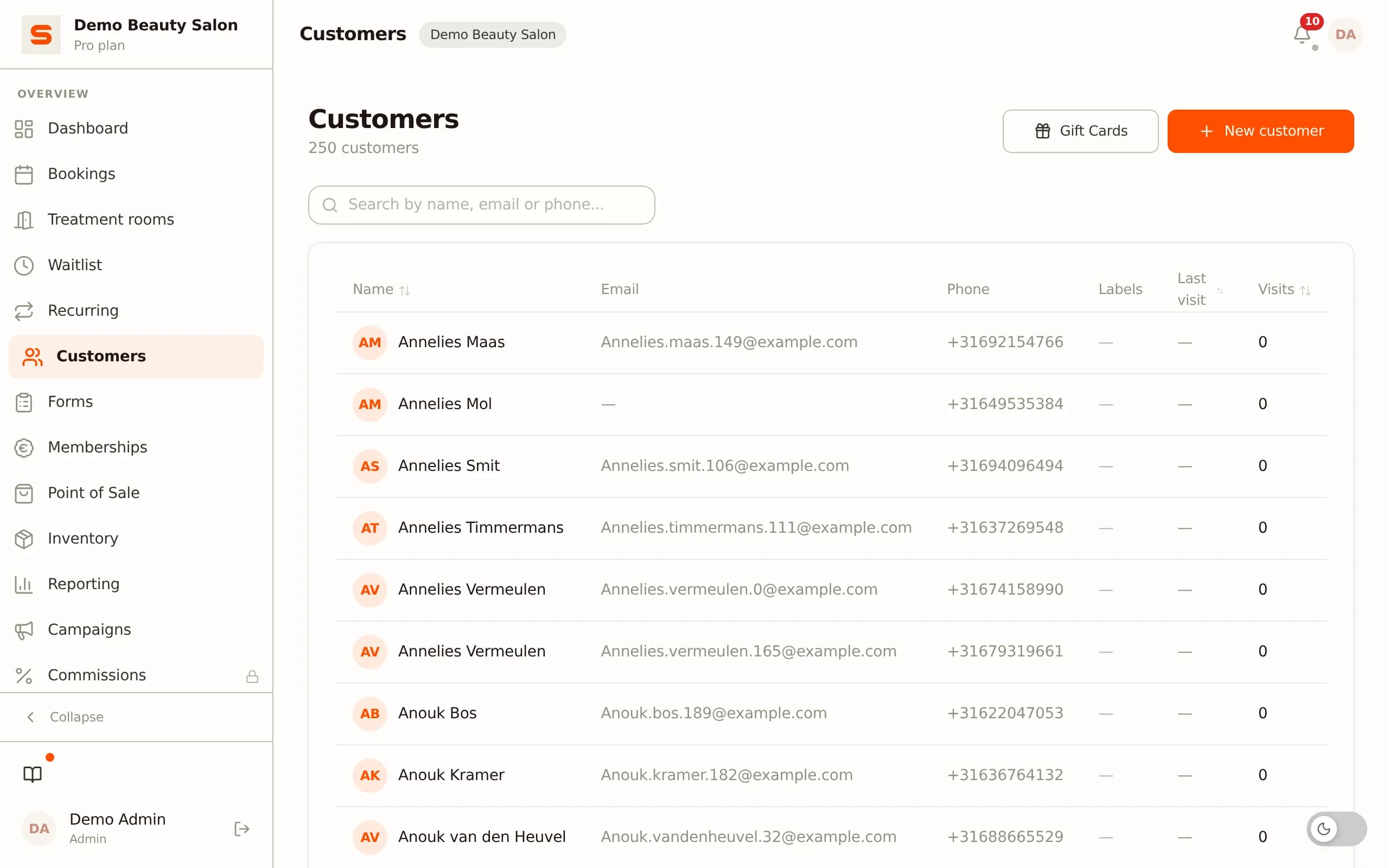
A complete client card contains at minimum: name, contact details, appointment history and notes about treatments (hair type, colour formula, allergies). That last category - medical and health data - is governed by data protection law and deserves special care.
Data protection obligations for freelance hairdressers
If you store client data you are a data controller bound by GDPR (General Data Protection Regulation). In practice this means: you ask consent for storing health notes, you do not keep data longer than necessary, and clients have the right to view or delete their data. In Salonnare, GDPR compliance is built in: health notes are stored encrypted in a secure vault and are only accessible to staff with the appropriate permissions.
Client history as business evidence
Beyond privacy, a well-maintained client card has business value: you can demonstrate which treatments you performed, when and for how much. That is relevant if a client later has questions about a treatment or if you need to substantiate per-client revenue during a tax audit.
Colour formula and treatment notes
Professional hairdressers record the colour formula used for each client. This information has no bookkeeping function, but is essential for the quality of follow-up treatments. In Salonnare you save this as a client note, directly linked to the client profile.
Client import when switching systems
Coming from another system? Import existing client data via CSV. Salonnare has a built-in import tool that maps column names from your current export to the correct fields.
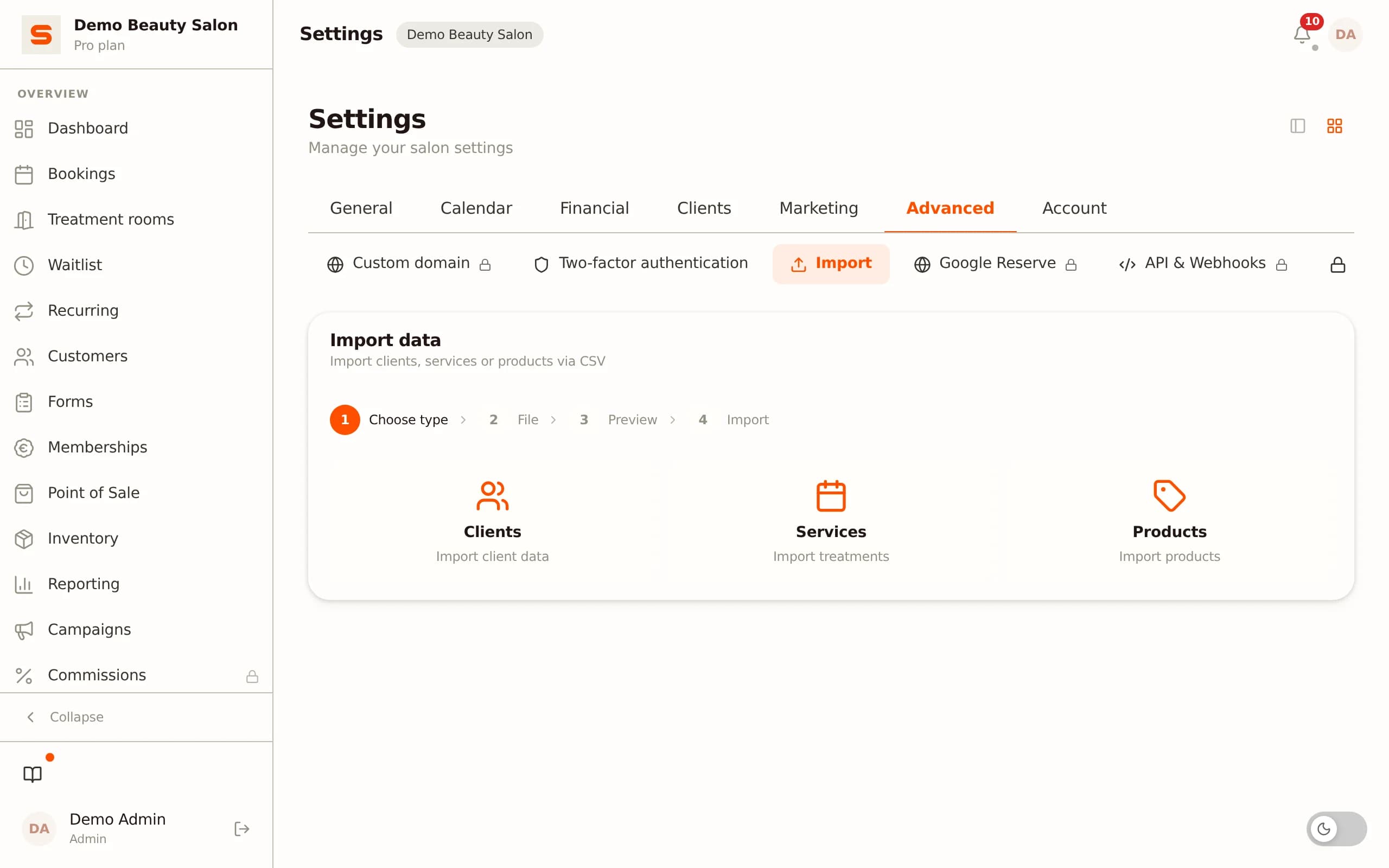
Appointment management and online booking as a freelance hairdresser
One of the most time-consuming tasks as a freelance hairdresser is managing appointments. Clients call or message for an appointment, you search for a gap in your head or in a paper diary, and confirm back. That costs more time than it appears - especially when you also have no-shows you are not paid for.
Online booking as a solution
With an online booking system clients can schedule their own appointment 24/7 via your booking page. They see available times, choose a service and confirm - without you having to do anything. The appointment goes straight into your diary. You receive a notification and the client gets an automatic email confirmation.
Automatic reminders
Salonnare automatically sends reminders to clients before their appointment. This significantly reduces the number of no-shows - and as a freelance hairdresser every no-show is a treatment slot you cannot fill at short notice.
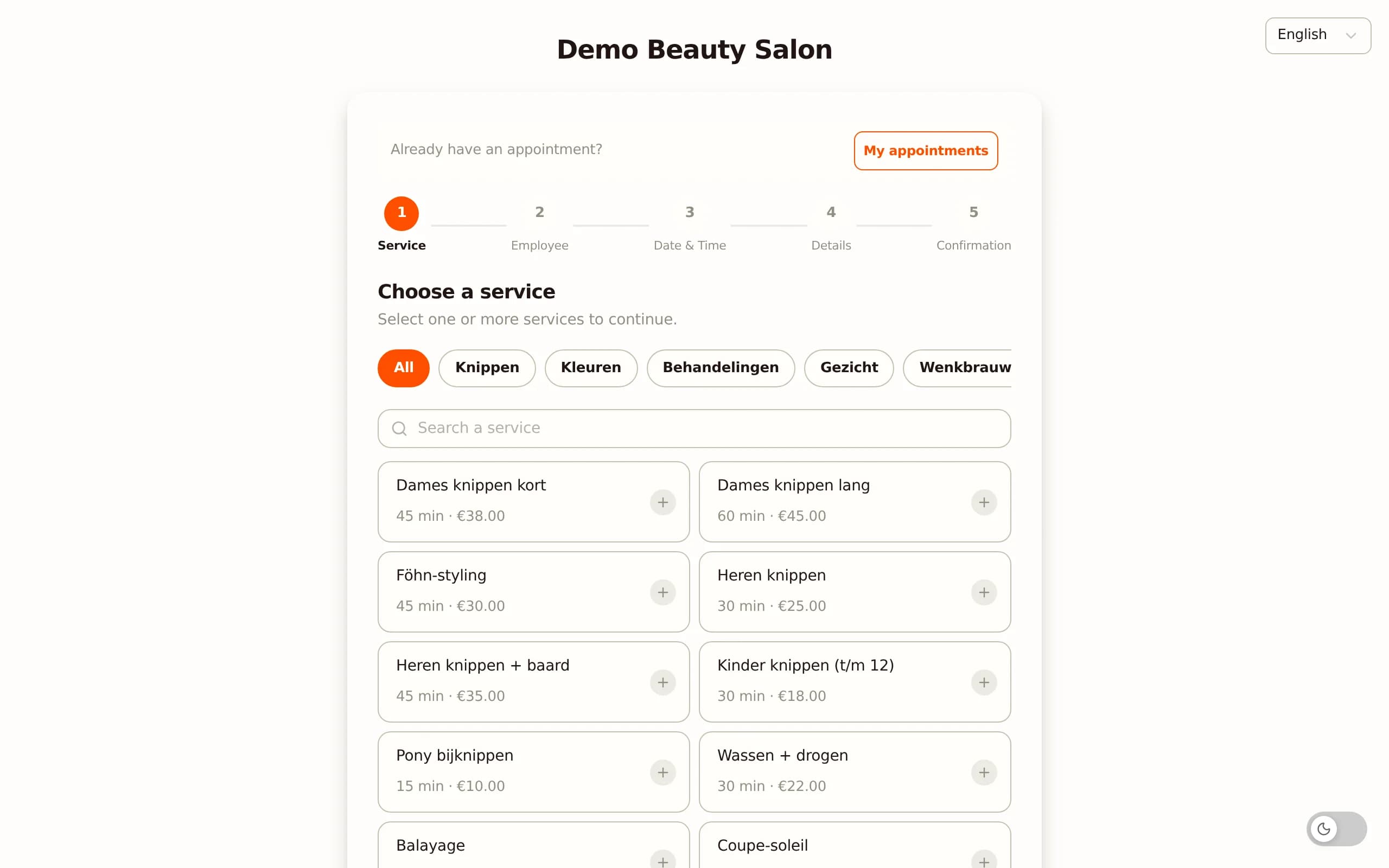
No-show fee
As extra protection you can activate a no-show fee. Clients who book online register a payment method at the time of booking. If someone fails to show up, you can automatically charge a fee. You set the amount and the conditions yourself.
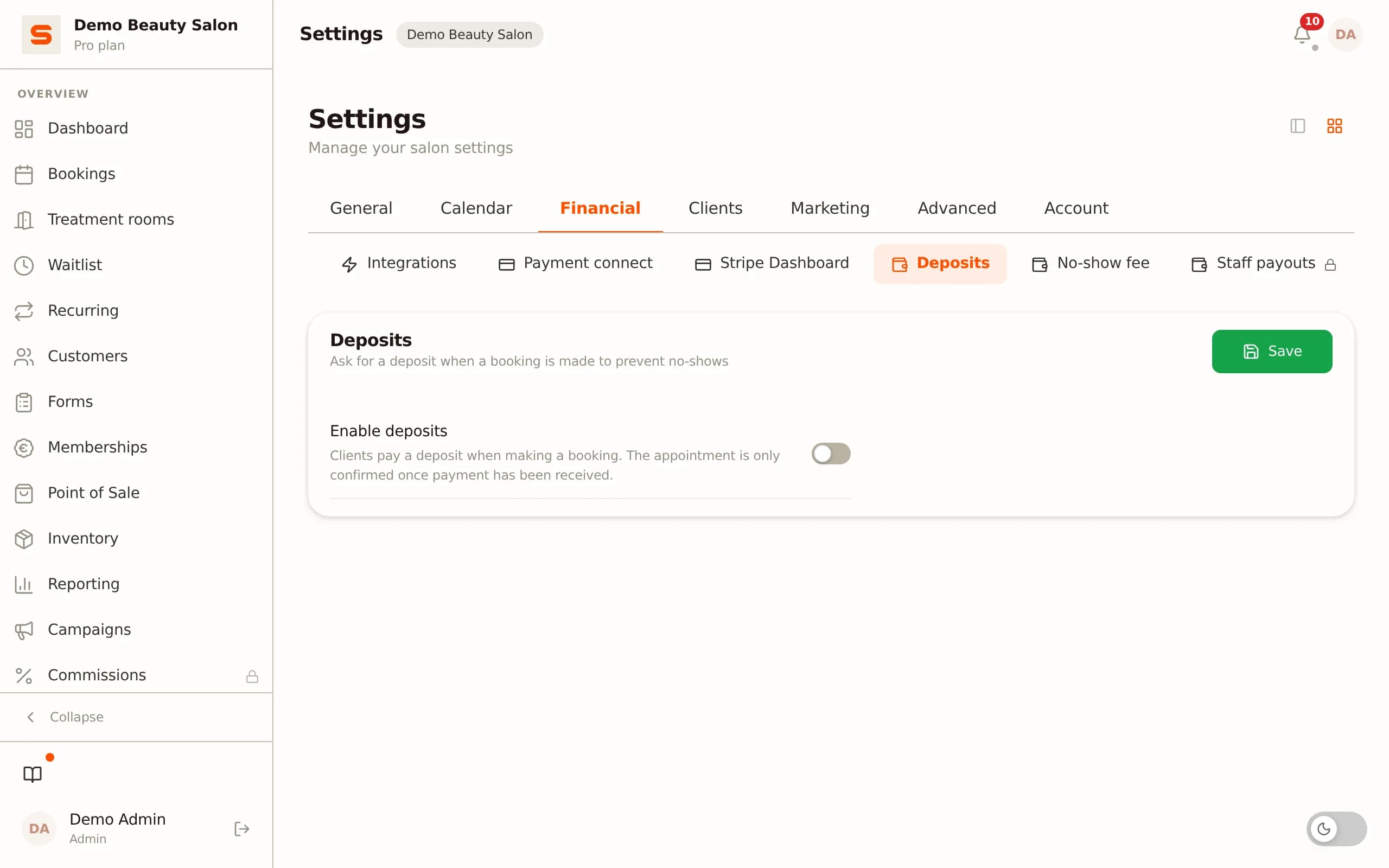
Deposit on booking
Alongside a no-show fee you can also require a deposit. Clients pay part of the treatment amount upfront when they book. This increases commitment and reduces the no-show rate further.
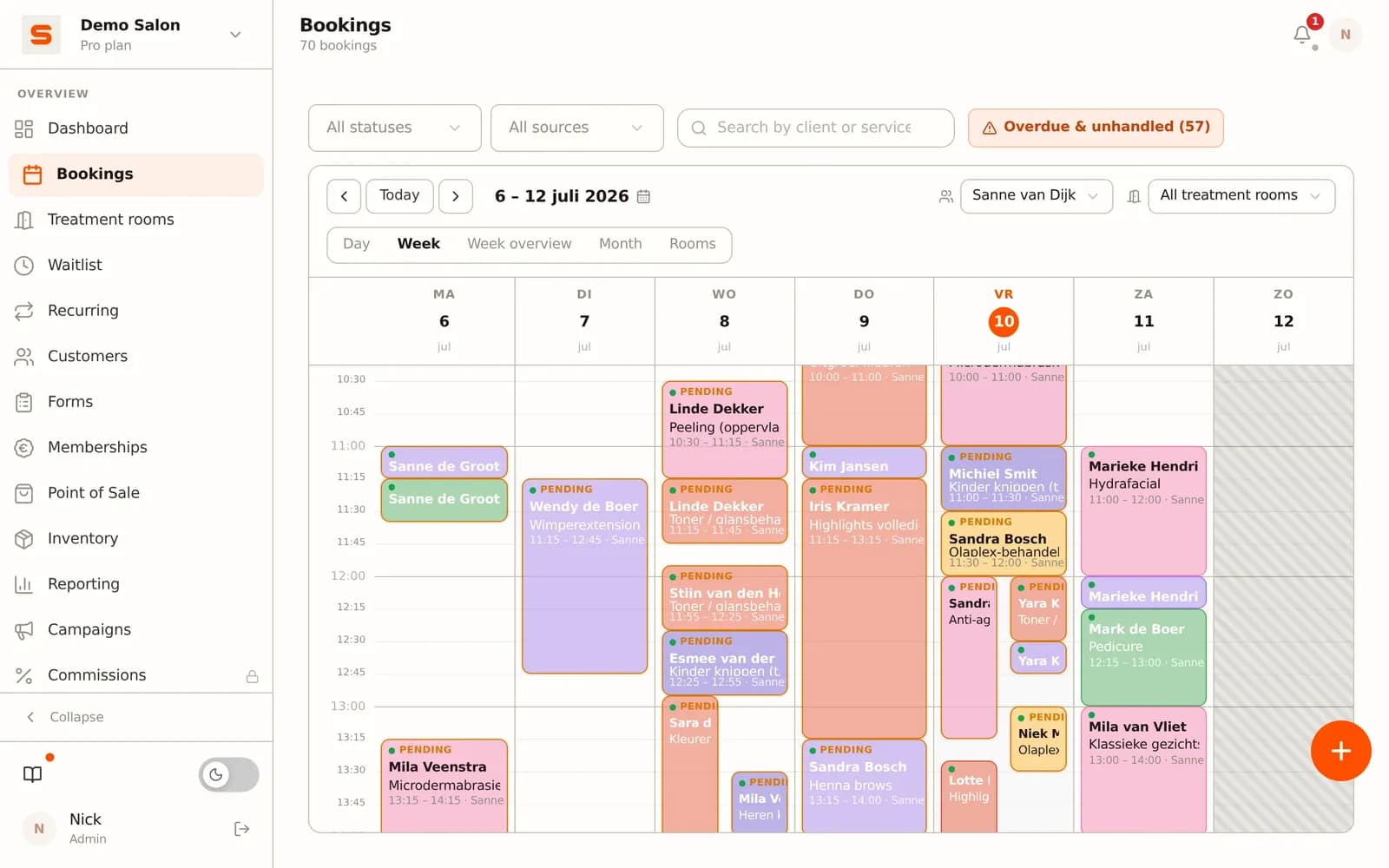
Week view at a glance
In Salonnare you see all your appointments in a weekly overview. You can see immediately when it is busy, when there are gaps and who is coming for which treatment. Ideal for planning as a solo hairdresser.
For a solo stylist, Salonnare's free plan is often all you need: €0 per month for 1 employee and 50 bookings per month, with no time limit and no credit card. You get online booking, a POS with VAT export, client cards, automatic reminders and sign-in via Google, Microsoft, Apple or Facebook - in five languages and with your data kept in the EU. As you grow, you move up to Starter (€29) or Pro (€59). Start for free today at salonnare.com/en/free.
Admin under control as a freelance hairdresser?
Try Salonnare for free and manage your appointments, till, VAT and client data in one system. Includes online booking and automatic reminders. No credit card required.
Start freeFrequently asked questions
Do I need to charge VAT as a self-employed hairdresser?
Yes, unless you qualify for the small business exemption (in the Netherlands: KOR). If your annual turnover stays below €20,000 (excluding VAT) you can opt into the exemption and do not need to charge or file VAT. Above that threshold you charge 9% VAT on hairdressing services and 21% on product sales. Consult an accountant to decide whether the exemption is beneficial for you.
What is the difference between the reduced and standard VAT rate as a hairdresser?
Hairdressing treatments (cutting, washing, colouring, blow-drying) fall under the reduced 9% VAT rate in the Netherlands. Products you sell (shampoo, hairspray, accessories) fall under the 21% standard rate. A POS system that stores VAT rates per service handles the split automatically.
How long do I need to keep my hairdressing records?
The tax authority requires a retention period of 7 years. This applies to your revenue records (receipts, daily summaries), purchase invoices, bank statements and contracts. Digital records via a POS system or accounting software make archiving far easier than paper receipts.
Can I keep client data as a freelance hairdresser without GDPR problems?
Yes, provided you follow GDPR rules: obtain consent for storing health notes (allergies, skin conditions), do not keep data longer than necessary, and ensure clients can access or delete their data. Salonnare has built-in GDPR tools including encrypted storage of health notes and consent management.
What does a POS system cost for a self-employed hairdresser?
Salonnare has a free plan for 1 staff member and 50 bookings per month, with no time limit. That is enough for many solo hairdressers to get started. As you grow, you scale to a paid plan with more bookings, reports and advanced features.